
|
|---|
 |
 |
 |
 |
 |
 |
 |
 |
 |
|---|
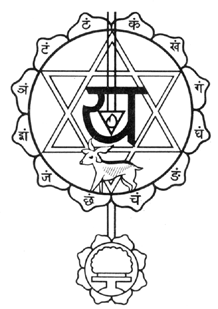 |
Left: Hindu symbol of Anahata Chakra (translates as unbeaten or unbroken), as depicted by Swami Satyananda Saraswati. [Source: "Theories of the Chakras" by H. Motoyama, p228]. |
The Anāhata Chakra
Description by various Yoga texts: Yoga-shikkā Upanishad description - The great twelve-sided wheel located at the heart is called Anāhata. [Chapter I, verse 173]. Shat-chakra-nirupana - Foremost amongst yogis, he (who meditates on the Heart Lotus) is ever dearer than the dearest to women. He is pre-eminently wise and full of noble deeds. His senses are completely under control. His mind, in its intense concentration, is engrossed in thoughts of the Brahman. His inspired speech flows like a stream of clear water. He is like the Devatā who is the beloved of Lakshimī and he is able at will to enter another's body. [Verse 27]. Gorakshashtakam description – Fixing the gaze on the tip of the nose and meditating on (Anāhata), refulgent like the lightening, in the Lotus of the heart, one becomes one with Brahman. [Verse 82]. Also known as: Living Love Center, Heart
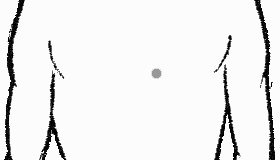
Location: Centre of the chest
Associated Color: Emerald Green
Symbol & Element: Air; Two triangles (one inverted)
Astrology sign: Air signs of Gemini; Libra and Aquarius
Physiological influences: Thymus; Lungs; Breathing; Heart; cardiac plexus, Blood Pressure
Endocrine gland: Thymus Gland, controlling the immune system
Sense: Touch
Consciouse Development: This Chakra is said to be concerned with developing compassion and empathy in an individual. It is also believed to be the point at which opposites in the psyche become balanced (e.g. mind and body, masculinity and femininity, love and hate etc.). Through this Chakra a more harmonious state of mind is gained so that one can emphasise with others dilemmas instead of simply resorting to hate and revenge. One is able to give love more unconditionally, excerpt a calming influence on others, feel compassion, and experience a deep sense of peace and centeredness. UMO Perspective: Through the fourth Chakra we attain an innate understanding of psychological issues. We begin to see that we are all confused to certain degrees and it is this confusion that is the root cause of all disharmony. Hate, anger, insecurity, and many other negative conditions are the product of a confused mind and as we realised this, and develop an innate understanding of the complex psychological issues that relates to living in this turbulent world, we begin to stabilise and develop an empathy produced by wisdom and understanding. |
|---|---|---|
 |
Left:
The Location of Anahata Chakra - slightly left of center and directly
over heart. |
|
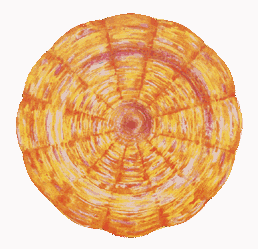 |
Left: C.W. Leadbeater's pictorial description of the heart chakra (Anahata). [Source: "The Chakras" by C.W.Leadfbeater]. |
|
|